Monday, May 24, 2010

Real Healthcare Costs (Nothing to do with Obamacare, mostly)

I’m writing mostly to think out loud, and because I don’t know what else to do. I have been quite interested in the health care debate playing out on the national stage as the government tries to slow down the escalating costs of health care. For the most part, I am extremely dissatisfied with their now mandated solutions, mainly because I don’t think they have addressed the underlying problems. I heard lots of politicians talking about the problem of rising costs, and few if any talking about the reasons behind the cost increases.

Regardless of the blindness of government “solutions,” the problem remains. I am writing about one encounter we recently had with a local clinic in an attempt to understand the cost better.

A few weeks ago my son decided to put a small eraser up his nose. We tried to remove it without success. Instead of trying to use the hemostat from my fishing tackle box to remove it, we decided to go to the urgent care clinic. We waited about 5 minutes to see a doctor. After showing us to an exam room it took the doctor with proper tools less than a minute to remove the eraser. As there were no other patients, we chatted with the Dr. and staff for about another 5 minutes. We were within the clinic for about 12 minutes, 15 max.

Today we received the bill: $350.

$350 represents much more than a days wages for me. I exchanged it 1 minute of labor. Even though my insurance pays this amount – which is why we have insurance – I’m still a little floored by the amount. I realize that there were years of schooling, there’s probably mal-practice insurance, and there are facilities and maintenance worked into the cost. But where did $350 come from? Who came up with that amount? Is it a national standard for eraser removal? Is it decided by the insurance company? Who sets the amount?

Oh Brian, how much is your son's health worth? This is one of my frustrations. I didn't know until getting the bill how much I would be paying. Why wasn't it $500?

Yet, on the other hand, I don’t suppose I would like the Value Meal price approach to medicine where services and prices are posted on a marquee, or even a system where the consumer could choose between good, better, and best services. But the lack of price transparency and economic feedback is frustrating. Perhaps if I had known it would cost $350 to remove the eraser, I would have been a little more willing to get the hemostat from my fishing vest. With the money saved I could have bought a new sage fly rod.

Patients get free healthcare after deductibles are met, so utilization goes up. I am quick to go to the doctor instead of getting out my fishing vest. As utilization goes up, insurance companies lose money and increase the costs of premiums. I understand that side of the loop. But I'm not sure of the relationship between the procedure costs and the insurance allowances.

Does anyone have any insight as to how procedures get their prices? Why $350 and not $100 or $500?

Wednesday, May 12, 2010

Simplicity and Simplifying


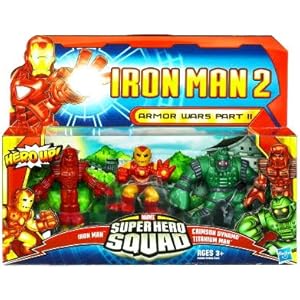
My son recently had a birthday. It was an excellent day. I took the day off of work and we concentrated on making memories. We told him he could eat anywhere for lunch - He chose old McDonalds. My wife volunteered to cook anything he wanted for dinner - He chose little corndogs. For a birthday present, my wife and I got him this awesome Iron Man remote controlled car. It ended up being defective so we took it back. We guided our son back to the store and the row of RC cars and trucks and said he could pick anything on the row he wanted. He looked for a while, browsed up and down the row, and then stopped at the end of the row and said, "I want this!" He held up a 10 dollar action figure set. He was elated with the gift.

It reminded me of the time we were at Sea World before our son was born. At the end of the day we told our daughter she should get a stuffed animal. As she stood before a large wall of stuffed animals, some as big as me, I began formulating the arguments I would use if she pointed to one of the larger animals. Instead, she chose a small orca about the size of my hand. It was nearly the smallest stuffed animal in the shop. She was elated with the gift.

So when do we stop being happy with the simple? Why is it that I so frequently catch myself admiring the figurative life-sized orca, or an awesome vehicle? How I make life complex!

The kids keep teaching the parents. Life is grand.

Saturday, May 8, 2010

Displaced Bad Guys and Forgiveness

White Hatted Good GuyMany times in cowboy movies the good guys wear white hats and the bad guys wear black hats. This week I been thinking about the figurative hats I give people to wear, and how there are some instances where I give good guys black hats. I have been contemplating forgiveness, and a phenomenon I am starting to call the "displaced bad guy."

"Displaced aggression" is when you take your frustration and anger on an inanimate object - like a punching bag, or going for a run, or whatever. I think there are situations that come up all the time when our frustration and anger for bad guys are projected onto non-bad guys. They become "displaced bad guys."

Here's an example, and the genesis of this line of thinking.

The Third Party Displaced Bad Guy

I am quite close to Mr. Darcy who was swindled out of a lot of money by Mr. Wickham. It caused Mr. Darcy a lot of pain and grief, especially because of the breach of trust. It was not easy for Mr. Darcy to forgive Mr. Wickham. It was a long road, and progress was slow.

Sometime afterwards I was in a church class where the topic was forgiveness. One person made the statement, "I don't see what the big deal is about forgiveness. It's not that hard."

The statement didn't sit well with me. Not the necessity to forgive, but the easiness of it - he made it sound so trivial. I explained briefly Mr. Darcy's situation, and mentioned it was hard for him to forgive Mr. Wickham. I then suggested that sometimes forgiveness takes time, especially when the wounds are deep. That sparked quite the debate. Surprisingly, Mr. Darcy became the bad guy for not being able to forgive immediately. Some in the class wanted to hand Mr. Darcy a black hat. It caught me off guard a little. Mr. Darcy was not the bad guy -- Mr. Wickham was. That is one example of a displace bad guy.

Some people take a while to find the road to forgiveness. Some take a long time to walk that road. But regardless of the pace, I don't think forgiveness is ever easy. Finding fault with someone because they have a slow pace to forgiveness makes them into bad guy and wounds them yet again. Perhaps the situation should be looked at with a wider lens. Direction is much more important than speed.

My take-away: I need to recognize I'm displacing the bad guy if I ever want to say something like, "Why can't you just let it go" or "Get over it already." I need to make sure I don't injure Mr. Darcy myself by labeling him a bad guy.

The Associative Displaced Bad Guy

Another type of displaced bad guy is described by the phrase, "The friend of my enemy is my enemy." The associative displaced bad guy is labeled a bad guy because they have some association with a bad guy. Let's suppose that Ms. Bennett does something nice for Mr. Wickham. If Mr. Darcy then takes offense at Ms. Bennett and treats her as if she had done all of the things Mr. Wickham had done, she is a displaced bad guy by association -- the hurt associated with Mr. Wickham becomes displaced toward Ms. Bennett.

This type of displaced bad guy has many forms and affects children as well as adults. An example would be the high school student who says, "I can't believe you were talking to him. Don't you know he dumped Elizabeth yesterday? He really hurt her feelings."

My take-away: This is such a difficult situation. If I were Mr. Darcy, I need to be certain I am treating Ms. Bennett according to our relationship, and not treat her as if she had done the same things as Mr. Wickham. Were I Ms. Bennett, I'm not really sure what I would do. I would certainly want to be sensitive to the feelings of Mr. Darcy if known.

Forgiveness

As I have pondered displaced bad guys and forgiveness, I have come to four conclusions.
  1. It is very easy to create a displaced bad guy. Now that I'm paying attention to it, I see it happening all the time.
  2. A sincerely felt "I'm sorry" is rare. I think a sincere forgiveness is even more rare.
  3. It is my opinion that anyone who thinks it is easy to forgive has never been deeply hurt themselves.
  4. I recognize that I have never been deeply hurt. Because I don't have those wounds, I recognize that I am more likely to label others as guys.
I recalled the last conference talk given by President James E. Faust in April 2007 entitled, "The Healing Power of Forgiveness." I hope I will remember this talk if I ever am deeply hurt. The talk was mostly about a tragedy that happened in an Amish community, and how there was "hurt but not hate."
Most of us need time to work through pain and loss. We can find all manner of reasons for postponing forgiveness. One of these reasons is waiting for the wrongdoers to repent before we forgive them. Yet such a delay causes us to forfeit the peace and happiness that could be ours. The folly of rehashing long-past hurts does not bring happiness.

Some hold grudges for a lifetime, unaware that courageously forgiving those who have wronged us is wholesome and therapeutic.

Forgiveness comes more readily when, like the Amish, we have faith in God and trust in His word. Such faith "enables people to withstand the worst of humanity. It also enables people to look beyond themselves. More importantly, it enables them to forgive."
My take-away: I hope I never give good guys black hats. By recognizing the types of situations where that is likely to happen, perhaps I will better avoid causing someone further injury. And if I am ever handed a black hat or if I ever encounter a Mr. Wickham, I hope I am able to frankly forgive and work through the anguish without anger.

Sunday, May 2, 2010

What is heaven like?

In the past few days some things have happened that have reminded me of what I expect heaven to be. It seems like in the last month or so I have run into many friends from my youth and college days and have pondered some of the the fun experiences we have had that cauterized our friendships.

And yesterday my brother-in-law received his endowment at the Timpanogos Temple. It was a wonderful experience. Lots of people from their ward came to participate with them. He and my sister currently live in the ward where I was raised so I knew lots of people. Three of my childhood heros were there, Brother Cook, my only home teaching companion growing up, Brother Johnson, a Boy Scout leader, and Brother Hunt, my explorer scout leader. I have great respect and admiration for these people.

So as I was in the temple pondering these experiences, surrounded by people I love, happy for the progression of someone I am close to, I was reminded again that heaven isn't harps and choirs, it's being surrounded by people you love.

I reflected on a journal entry I had written years earlier. Bill Cox, another hero from my youth, was speaking in sacrament meeting of my mom's ward where my wife and I were visiting. Bill was the high council speaker. As he spoke I had a flood of love and emotion come over me as I remembered all the good he had done for our family. Then I had the thought that this is what heaven will be like - it won't be filled with friendly but unfamiliar faces, but we will be surrounded with people we love. And when we see the Savior again, he won't be an austere and impersonal authoritarian, but rather we will have a flood of similar emotion - of our interactions with him, of his demonstrated love for us, and our desire to be close to him. That is my view of heaven, and I think I am scripturally sound.

What is your view of Heaven?